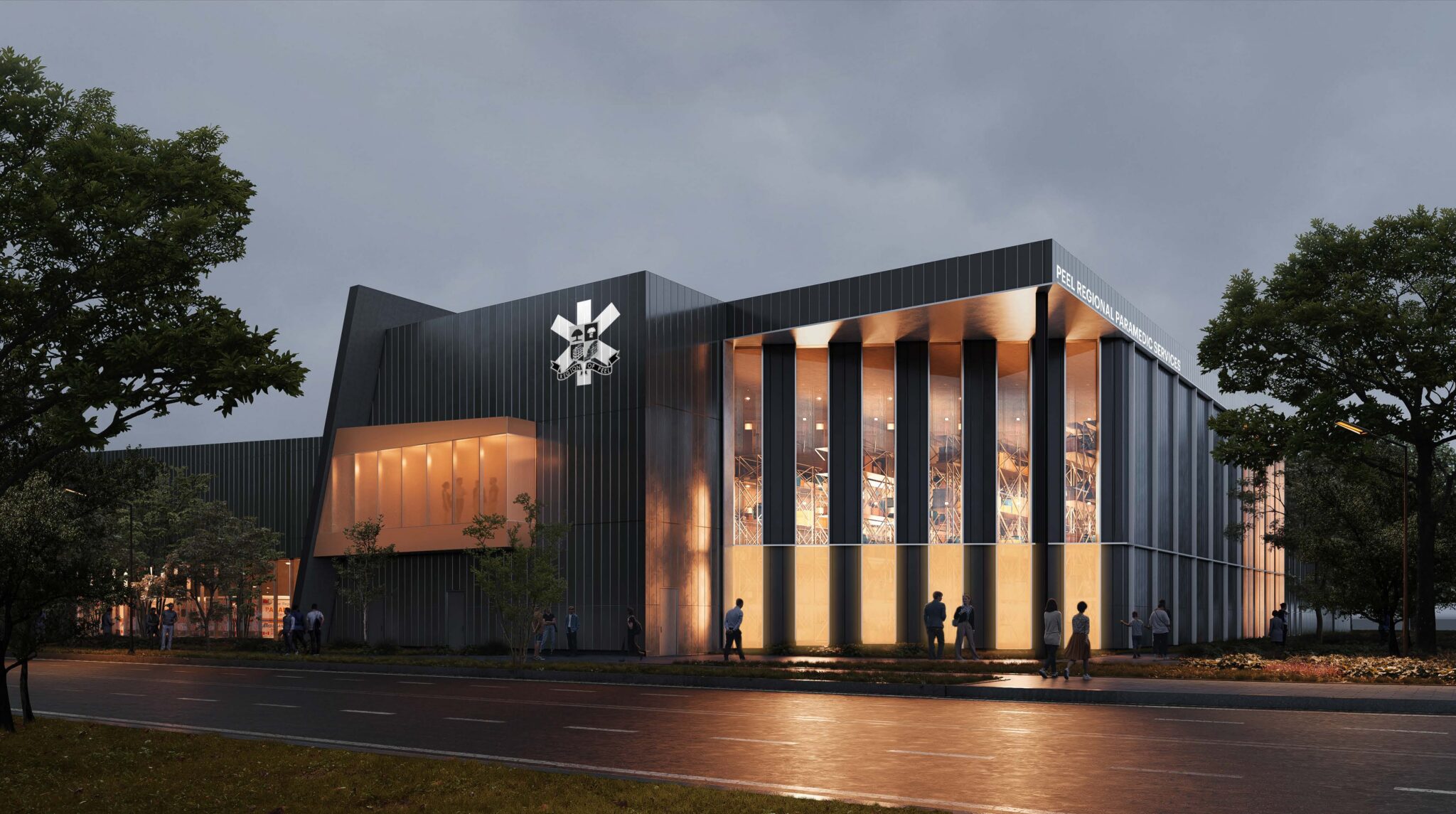
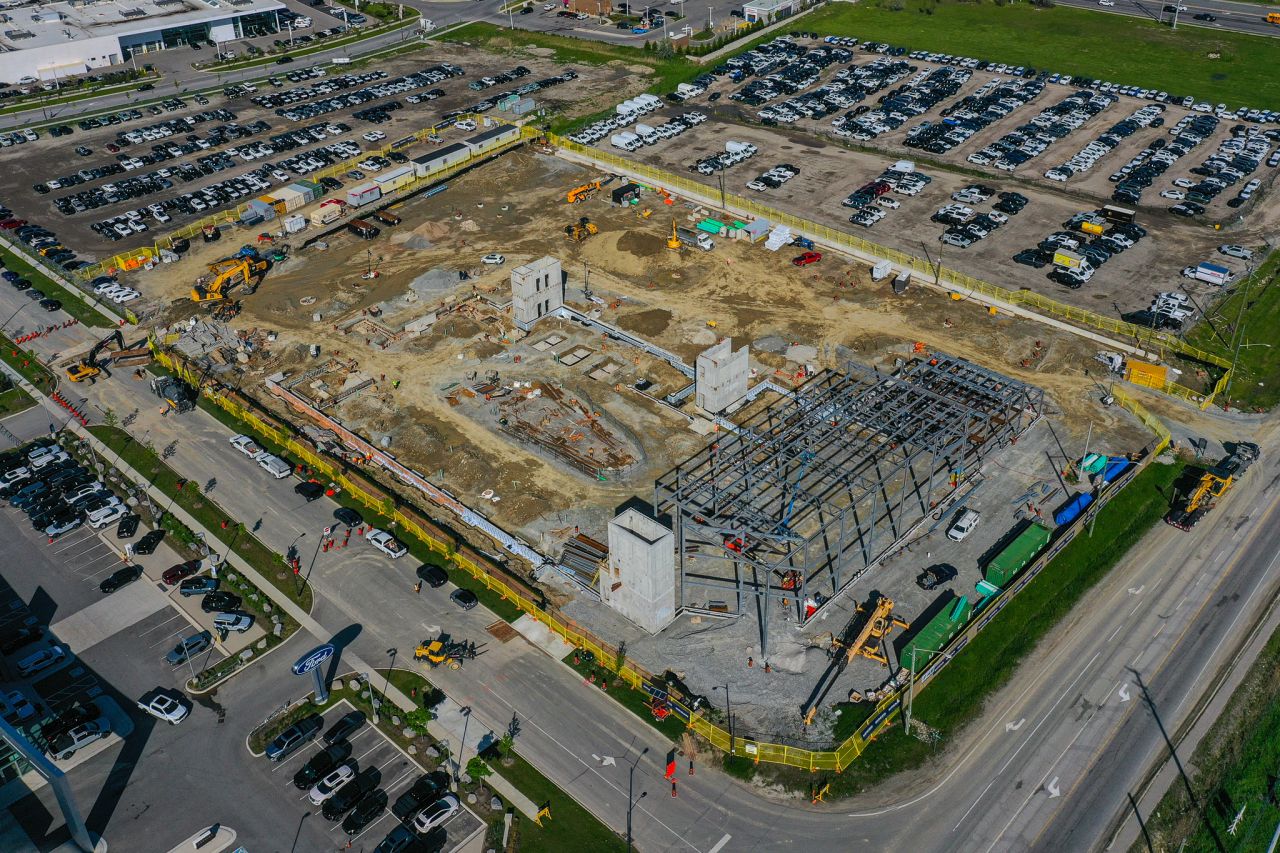
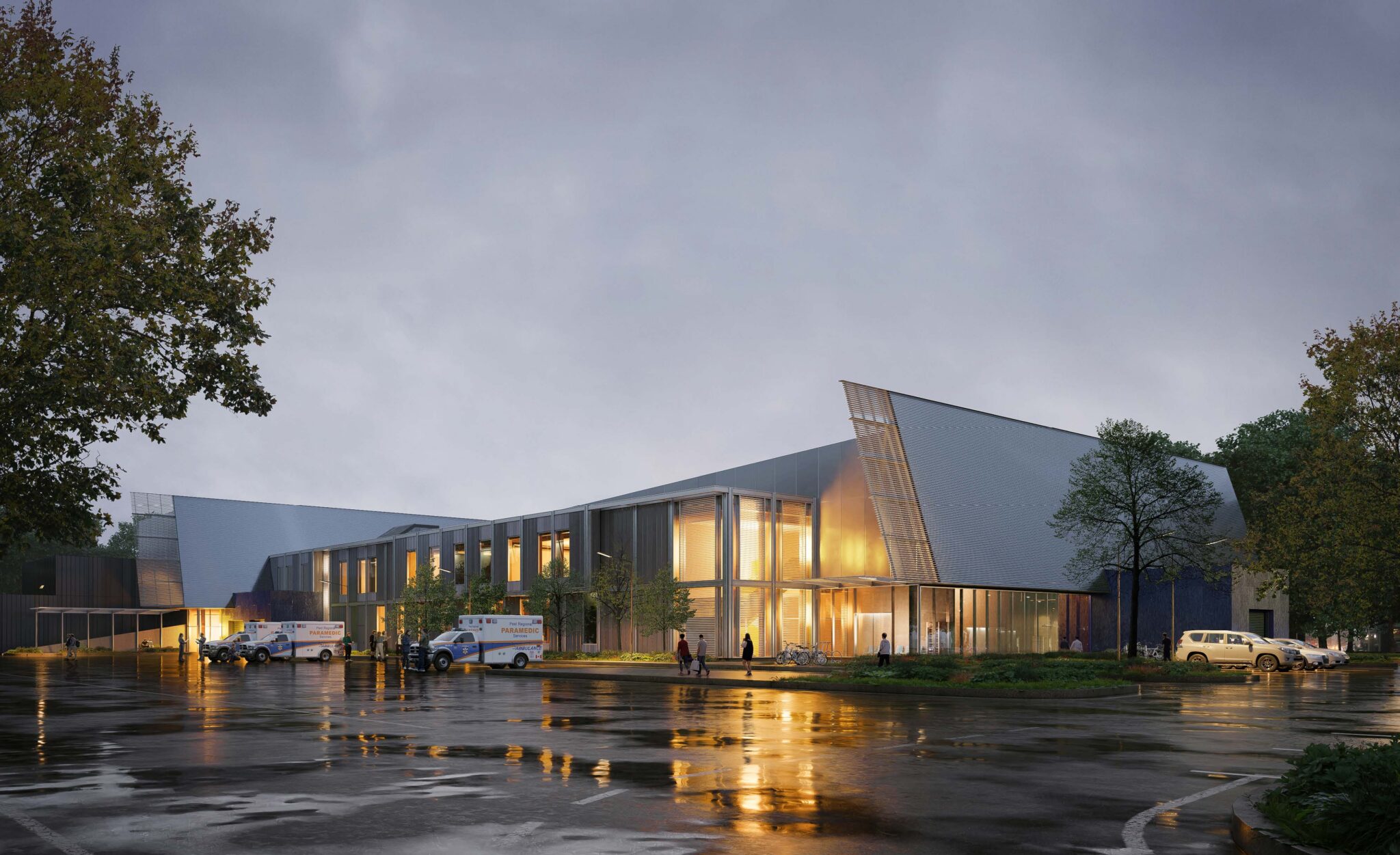
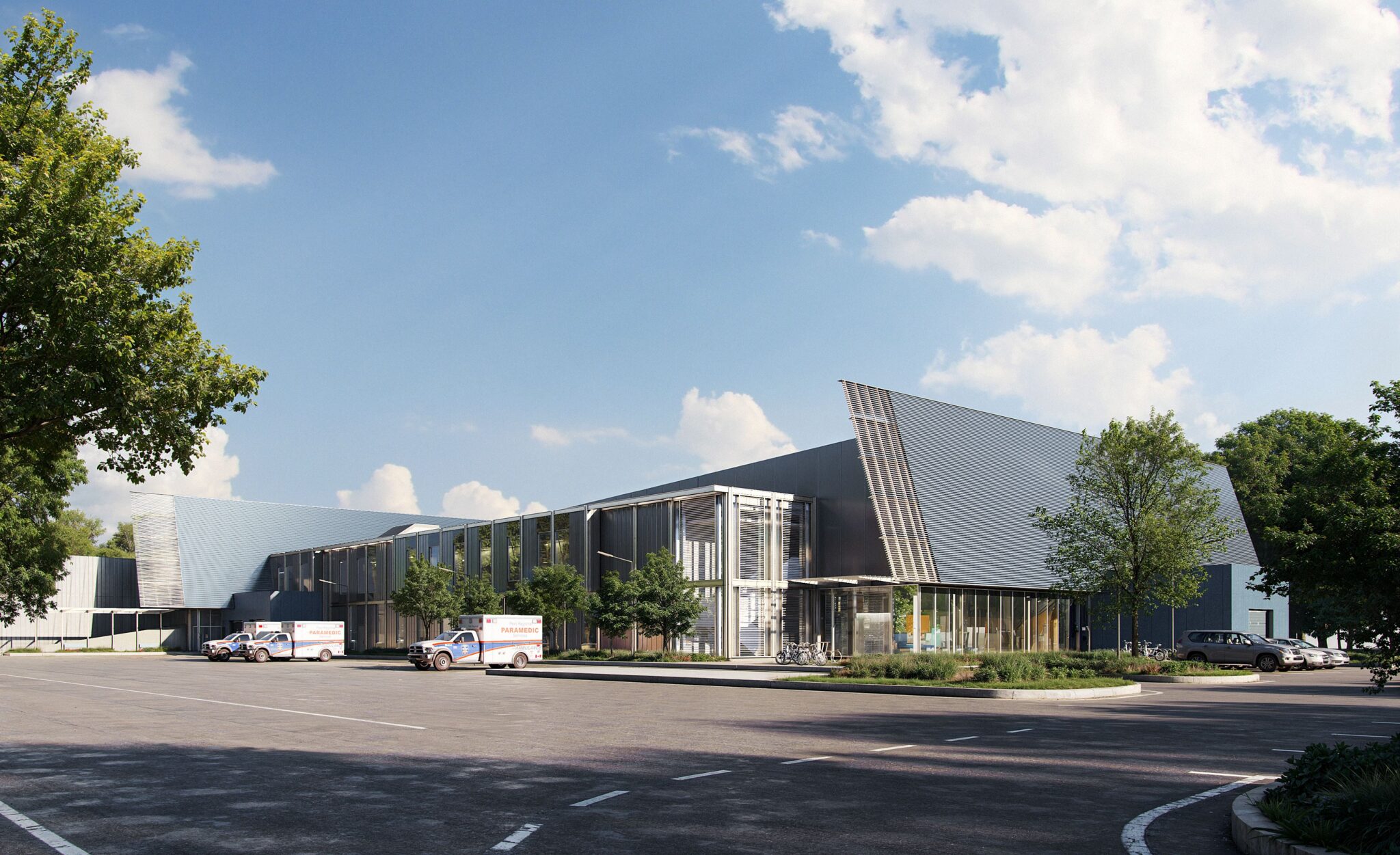
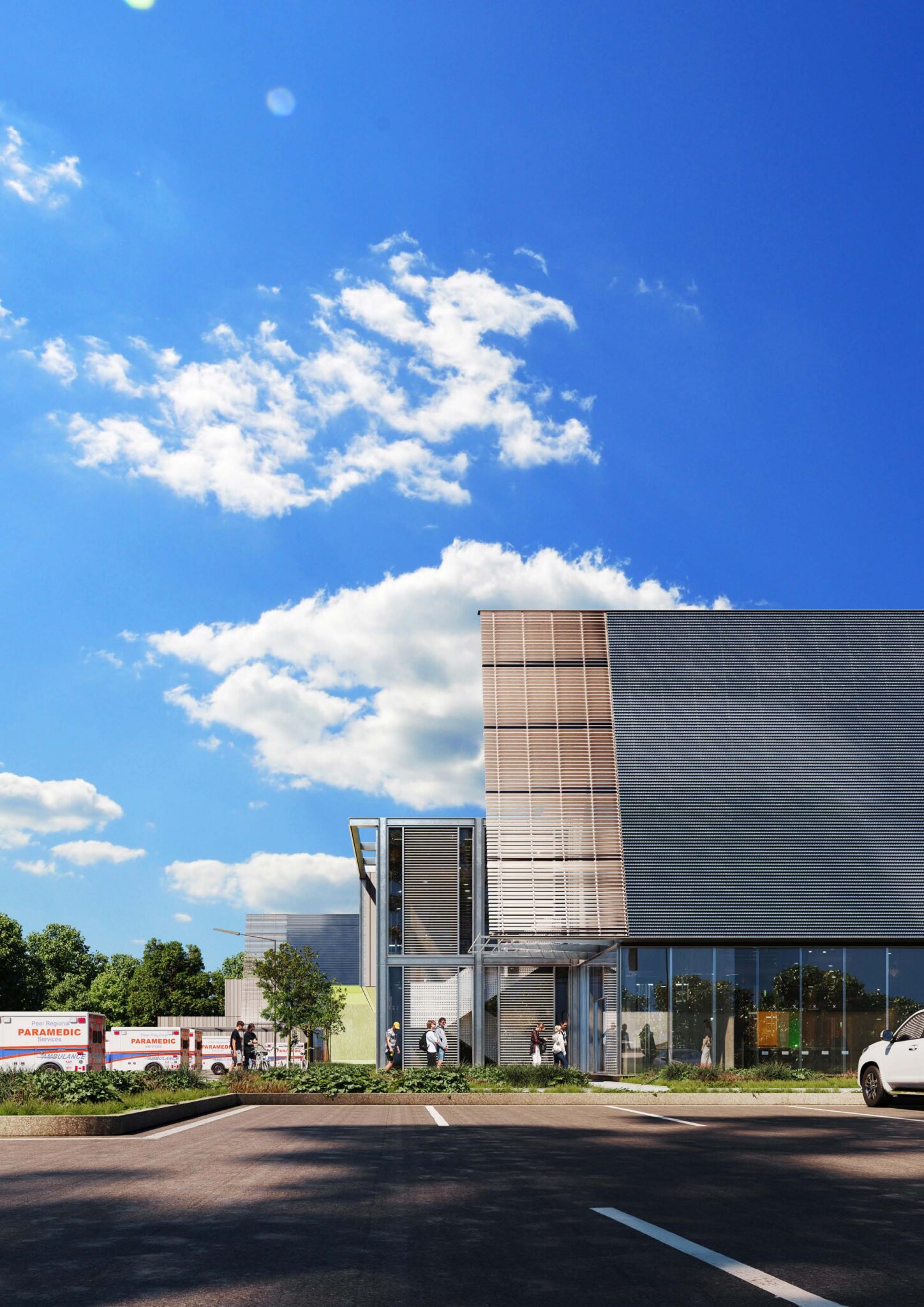
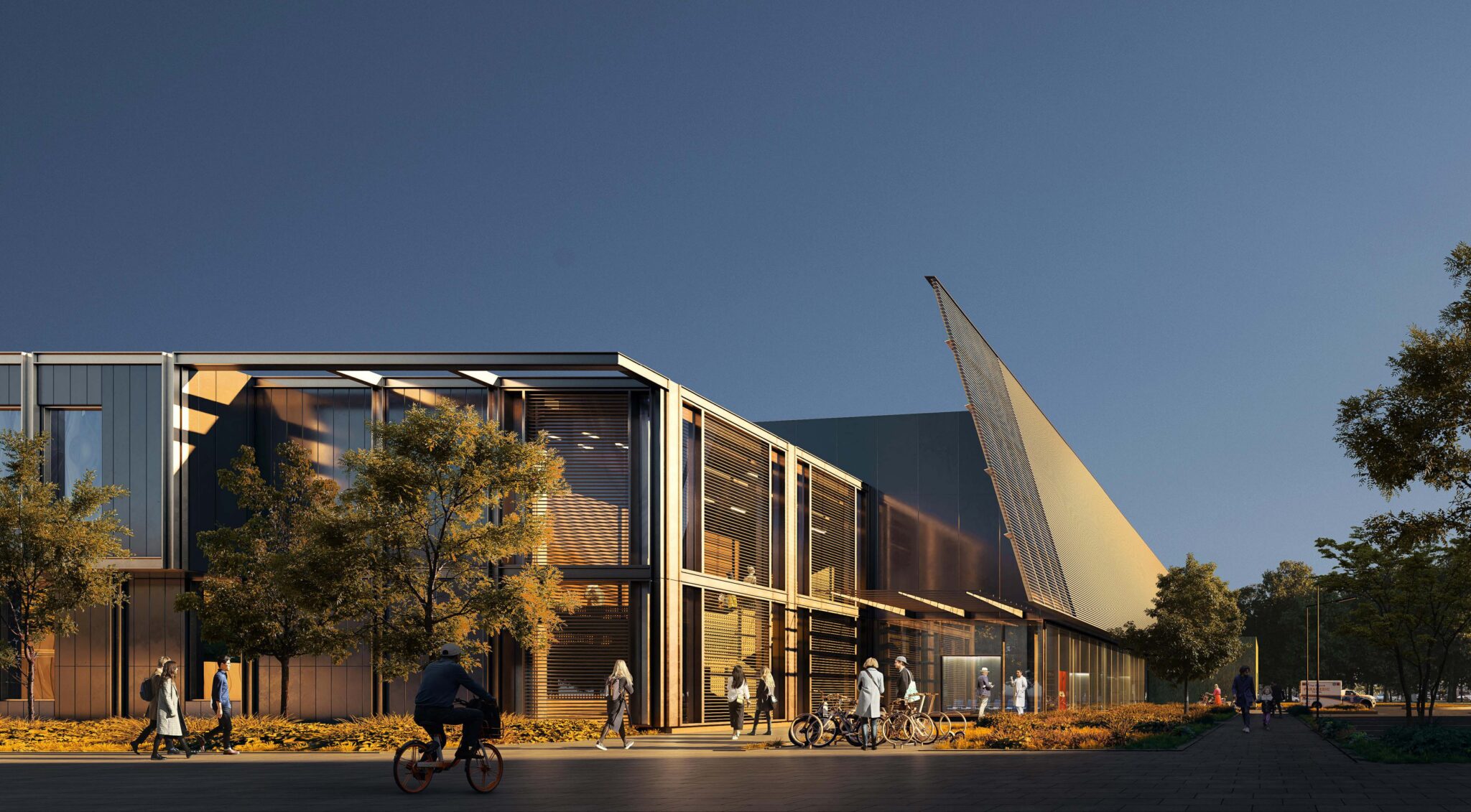
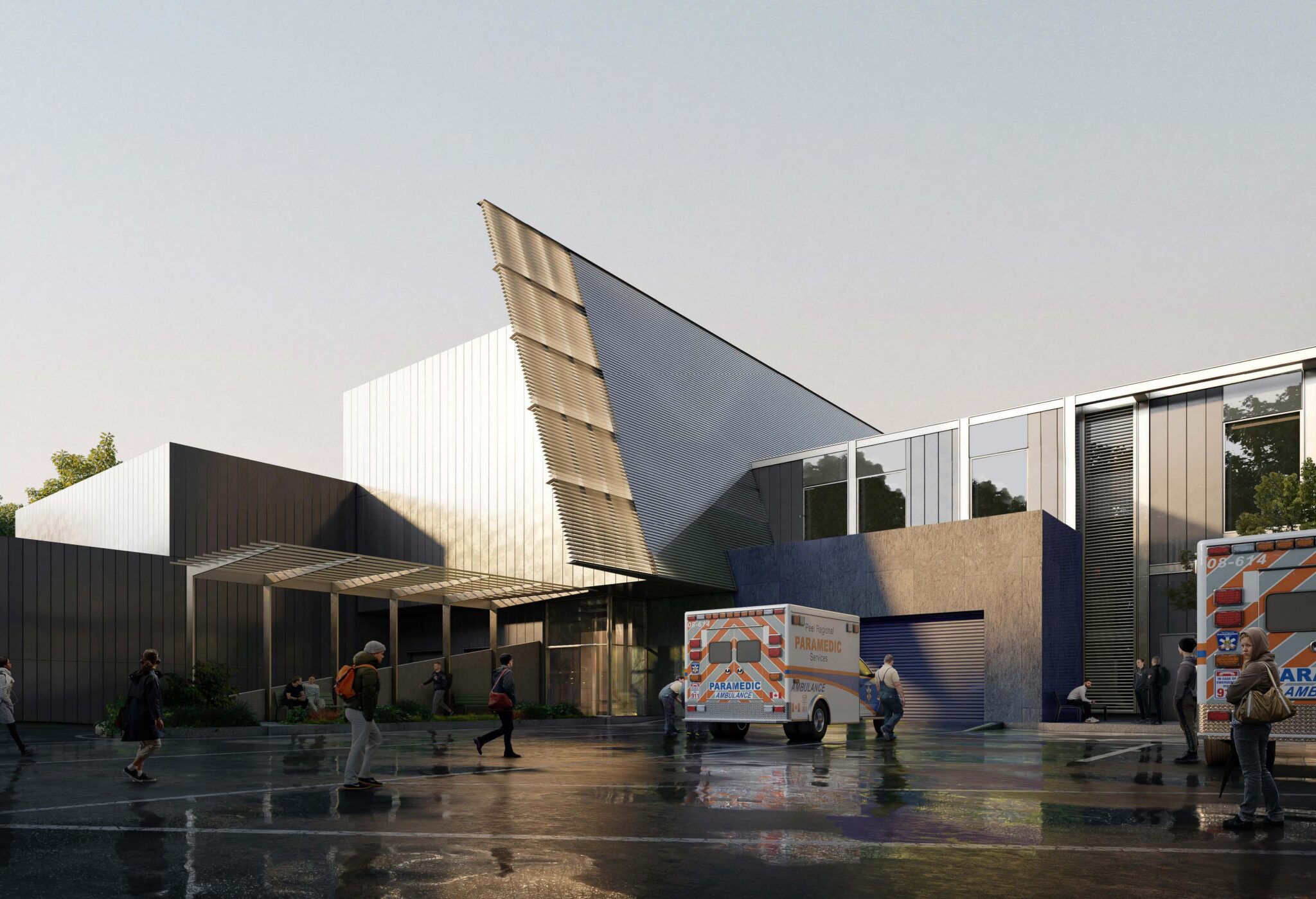
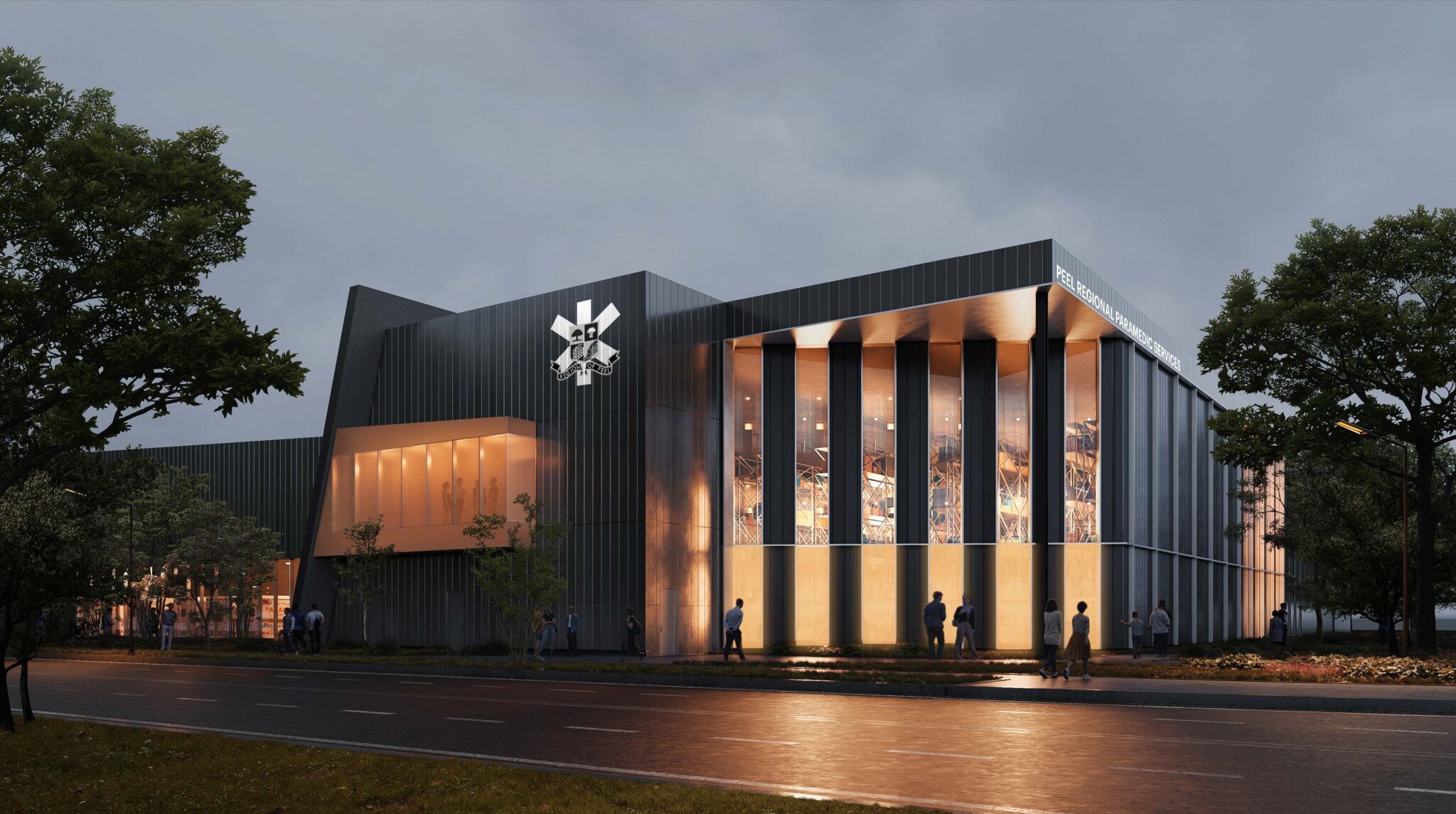
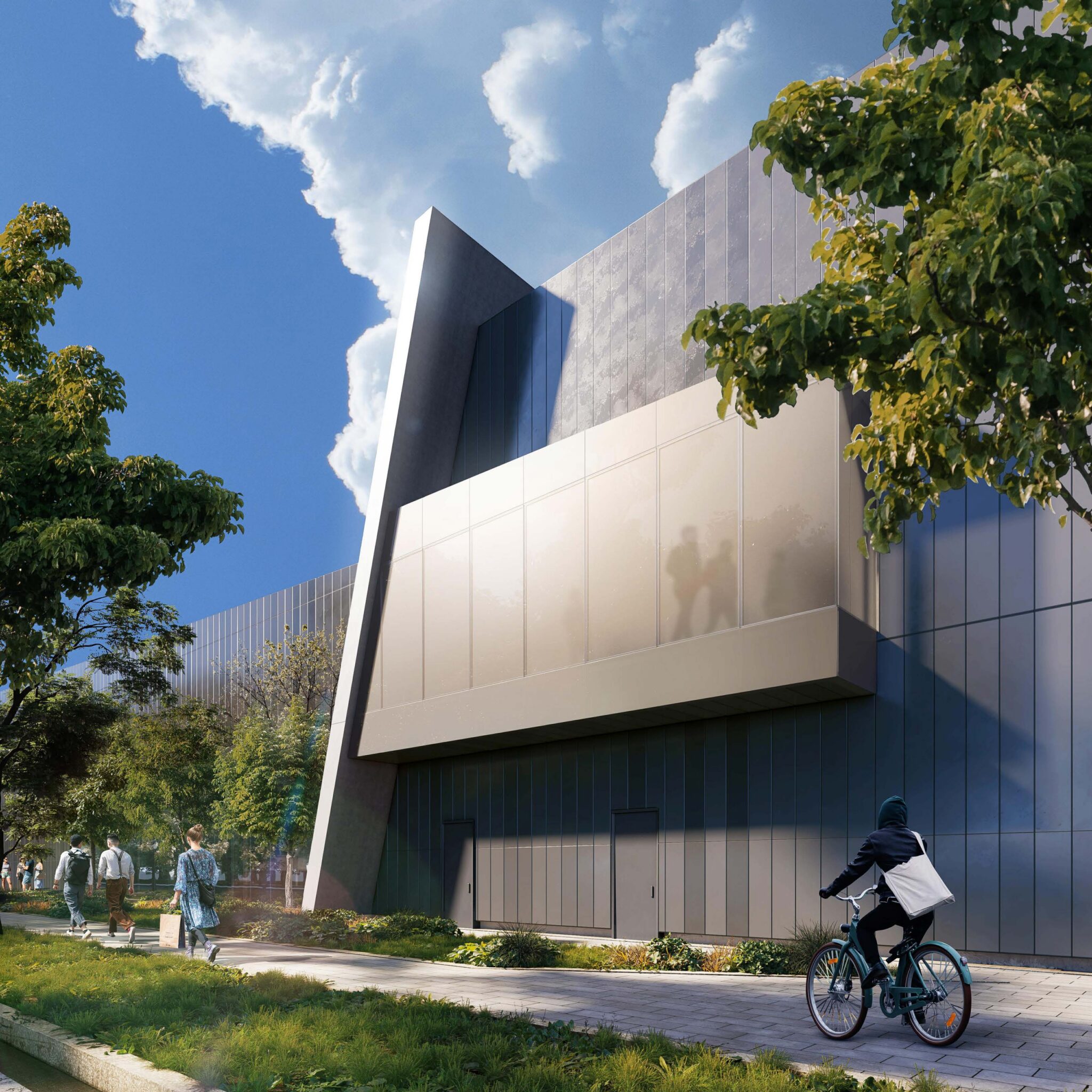
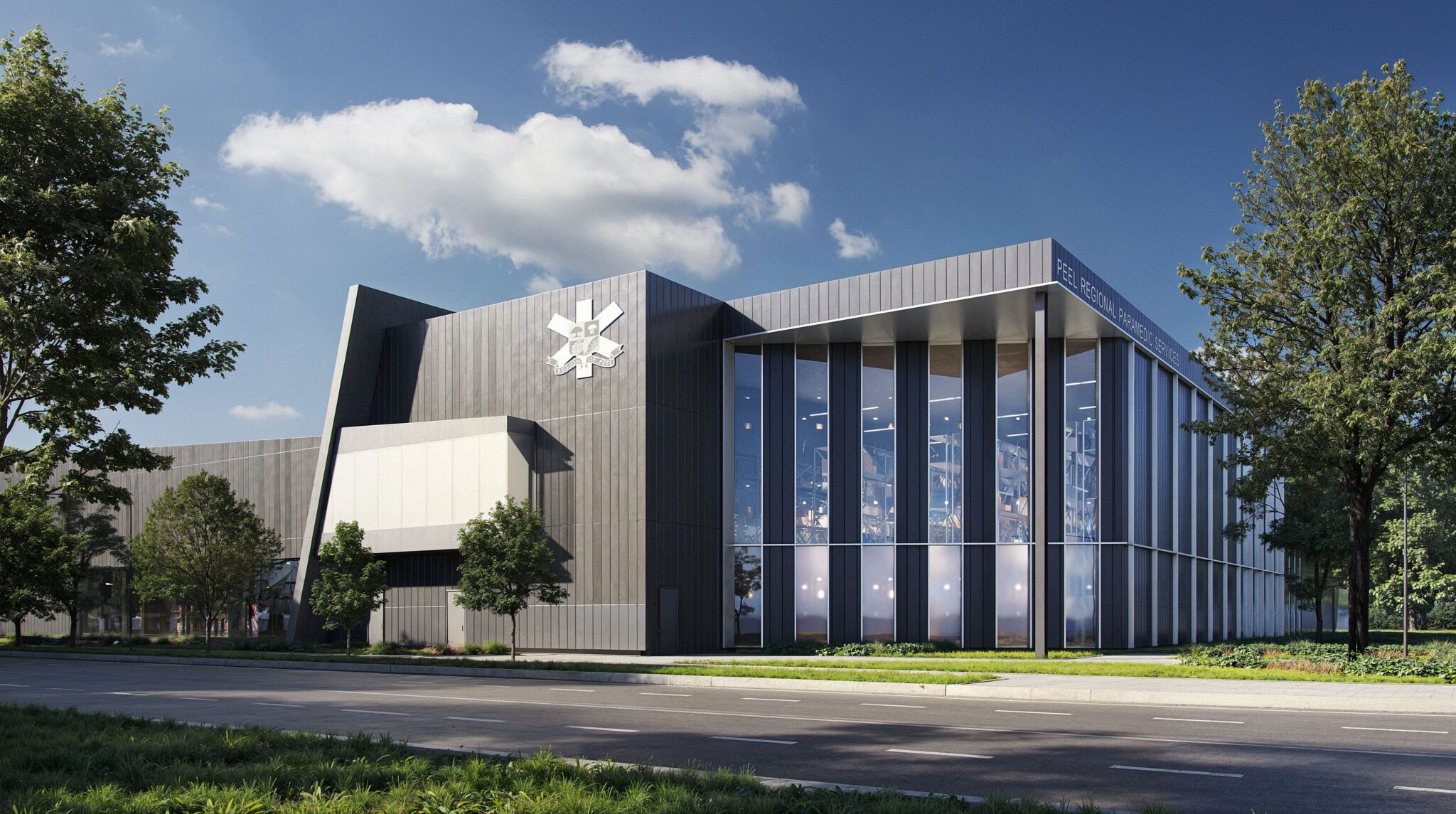
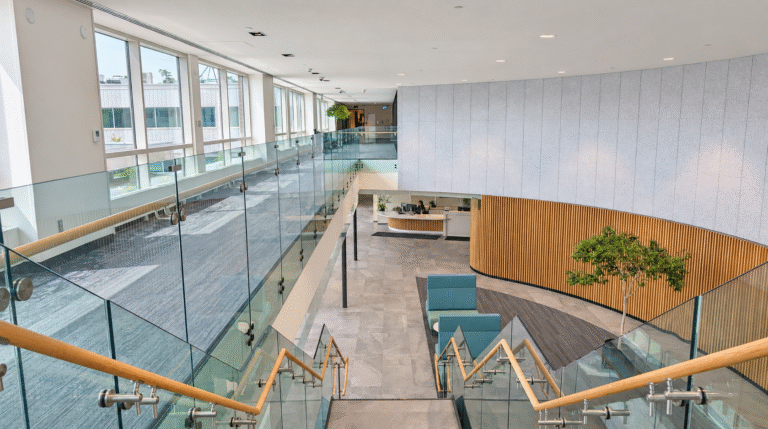
The Docksteader Peel Regional Paramedic Services (PRPS) Reporting Station is a landmark public infrastructure project for the Region of Peel, currently under construction in Brampton, Ontario. With a total area of approximately 84,443 sq. ft., the facility is the largest paramedic reporting station in Peel Region and a critical hub supporting emergency response across North Peel and North Brampton. Matheson is leading construction of the three-level facility, which includes a mechanical penthouse and consolidates four primary functional zones under one roof: a high-capacity interior vehicle bay, ambulance make‑ready and logistics areas, administrative offices, and dedicated training and staff wellness spaces. The building is designed to support 24/7 operations, improve deployment efficiency, and enhance paramedic readiness through centralized services and rapid ambulance turnaround. The facility is envisioned as a post‑disaster–ready operations centre, capable of maintaining continuity during large-scale emergencies and extreme weather events, reinforcing community resilience and public safety.
Environmental & Sustainability
This project is designed as a model of sustainable public infrastructure, targeting Canada Green Building Council (CaGBC) Zero Carbon Building – Design Standard Certification (Version 3) in alignment with the Region of Peel’s Net Zero Emissions Building Standard. The project prioritizes a zero‑carbon balance by significantly reducing both operational and embodied carbon through an integrated approach to building design, systems, and material selection. A high‑performance envelope, advanced daylighting strategies, and passive design measures work together to lower overall energy demand while promoting occupant comfort and wellness. The facility is powered by all‑electric, high‑efficiency mechanical and electrical systems, minimizing reliance on fossil fuels and enabling compatibility with a decarbonized energy grid. Passive solar strategies, including large solar wall elements, contribute to substantial reductions in winter heating loads, while optimized glazing and building orientation enhance energy performance year‑round. Low‑carbon material strategies, including attention to structural systems and construction methods, further reduce upfront embodied emissions in accordance with Zero Carbon Design requirements. Designed with long‑term resilience in mind, the station incorporates infrastructure readiness for future electric ambulance fleets and EV charging, supporting the ongoing decarbonization of emergency services operations. Through its comprehensive sustainability strategy, the Docksteader Reporting Station establishes a new benchmark for low‑carbon, future‑ready civic buildings in Canada.